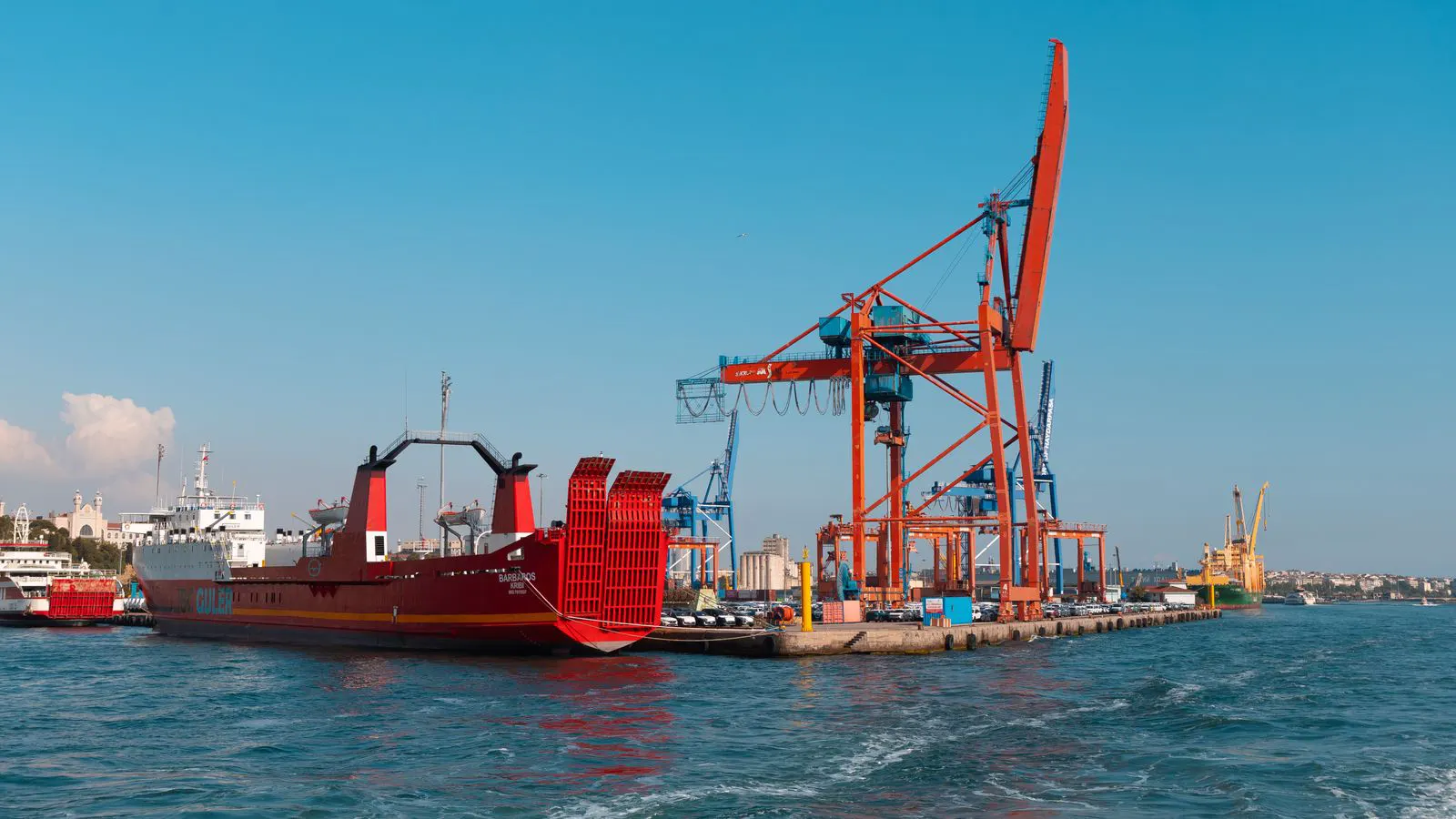
Ocean freight directly changes landed tire pricing through container rates, port congestion, and fuel surcharges. Buyers must build buffer, track volatility, and compare routing options to control international shipping costs and protect margins.
- Ocean freight rates move independently of tire manufacturing costs and can swing the final landed price.
- International shipping costs include more than the base rate, including fuel surcharges, port fees, and demurrage.
- Freight volatility requires buyers to use index-linked contracts, longer booking windows, or regional sourcing.
- A single container can contain multiple SKUs, so routing and fill efficiency change per-unit cost.
- Documentation and inspection checks are part of the cost chain, not just administrative steps.
Ocean freight determines much of the cost difference between a locally produced tire and an imported tire. The price shown on a supplier invoice rarely reflects what a buyer actually pays. Once the tires leave the factory, the cost structure changes. Port fees, vessel capacity, fuel costs, and transit time all feed into the final invoice.
This explainer breaks down how those variables work. It defines the terms buyers need, shows how each one affects sourcing decisions, and walks through a worked example in plain language.
What Is Ocean Freight in Tire Importing
Ocean freight is the charge for moving goods across an ocean in a container or bulk vessel. For tires, the cargo usually travels in intermodal containers. A standard container may hold several tons of tires, depending on the tire size and packaging. A 40-foot container can hold a larger volume, but the weight limit remains the primary constraint for dense goods.
The freight charge is not a single fixed number. It is built from several components. The base rate covers the vessel space and the route. Fuel surcharges adjust for diesel or LNG prices. Port handling charges cover terminal operations at origin and destination. Demurrage and detention charges appear when containers are not picked up or released quickly.
Tires are dense and heavy. They can fill a container quickly by weight. A 20-foot container has a weight limit that may be reached before the volume limit. This means a full container of heavy-duty tires may pay for weight-based capacity. For example, a load of industrial tires may reach the maximum allowable weight while still leaving empty cubic space. The carrier charges for the weight class, not the empty air.
Packaging method also affects the rate. Tires wrapped in plastic shrink wrap stack more securely and may allow tighter loading. Loose tires require bracing and dunnage, which takes up space and increases handling time at the port.
How International Shipping Costs Change Landed Price
Landed price is the total cost to move a product from the factory to the buyer’s warehouse. It includes the product cost, ocean freight, insurance, customs duties, inland trucking, and local handling.
For imported tires, ocean freight can be a large share of the landed price. If a tire is manufactured in one region and sold in another, the buyer pays for distance. The longer the route, the more variables enter the cost. A transpacific route involves different carrier networks, port infrastructure, and regulatory environments than a transatlantic route.
International shipping costs include:
- Base ocean rate for the route and vessel type.
- Fuel surcharge based on current energy prices.
- Origin port handling and documentation fees.
- Destination port handling and terminal storage.
- Insurance for cargo in transit.
- Customs clearance and duty payments.
- Inland transport from port to buyer location.
Each of these can shift. A small change in fuel price can raise the surcharge. A port strike can add days and storage fees. A customs hold can delay release and trigger detention.
Consider a specific scenario. A buyer in Europe imports tires from Asia. The base rate might be one amount in winter and higher in summer. The fuel surcharge tracks the price of marine diesel. If the destination port experiences congestion, the container sits at the terminal for days. The buyer pays for this storage, known as detention, after a grace period expires. This fee is often charged daily and can accumulate quickly.
Freight Volatility and Its Effect on Planning
Freight volatility means the rate changes over time. Rates rise when demand exceeds available vessel space. They fall when capacity is abundant. For tires, this creates a timing problem.
A buyer may book a container during a low-rate period. The tires may arrive after the market rate rises. The landed cost is locked, but the selling price may have moved. Alternatively, a buyer may buy tires when the freight rate is high. The cost passes through to the final price.
Freight volatility also affects lead time. When rates rise, carriers prioritize higher-margin cargo or faster transits. Some routes add surcharges for speed. Buyers may face longer wait times or higher costs for the same service level.
Planning for volatility means building flexibility. Buyers can:
- Use index-linked freight contracts where the rate tracks a published index.
- Book containers earlier in the season to secure capacity.
- Split shipments across multiple carriers or routes.
- Keep inventory buffers for high-turnover SKUs.
- Monitor port congestion before releasing goods from the factory.
These steps do not remove volatility. They reduce the surprise and the margin impact.
For instance, an index-linked contract might set a base rate and add a percentage change based on a fuel index. If the index rises, the freight cost rises. But the buyer knows the formula in advance. This predictability helps in financial planning.
Booking early can secure a rate before demand spikes. If a buyer books three months before the peak season, they may lock in a standard rate. If they wait until the peak, the rate may be significantly higher.
Splitting shipments across multiple carriers can hedge against a single carrier’s rate increase or service failure. If one carrier raises its price, the buyer can shift volume to another.
How Sourcing Decisions Change With Freight Rates
When freight rates are low, buyers may favor imported tires. The cost advantage can offset longer transit times. When rates rise, the imported tire may no longer be cheaper than a regional or local alternative.
Sourcing decisions must compare the total landed cost, not just the factory price. A tire with a lower unit cost may become more expensive once freight, duties, and storage are added.
A buyer should ask:
- What is the total cost per unit at the destination?
- How long is the transit time?
- What is the risk of delay or demurrage?
- Can the buyer absorb a rate increase without changing the sale price?
- Are there alternative suppliers in closer regions?
These questions shape the supplier list. A vendor may win a quote on product price but lose on logistics. A vendor with a higher price but a shorter route may be more competitive.
Imagine two suppliers. Supplier A is in Asia and offers a tire at $50 per unit. Supplier B is in a nearby region and offers the same tire at $55 per unit. The ocean freight from Supplier A adds $15 per unit. The local transport from Supplier B adds $3 per unit. Supplier A’s total landed cost is $65. Supplier B’s total landed cost is $58. Supplier B wins despite the higher factory price.
This comparison requires accurate data on all cost components. Buyers should request itemized quotes from freight forwarders. They should include hidden fees like documentation, terminal handling, and inland trucking.
A Worked Example in Plain Words
Imagine a tire importer in a coastal city. The importer buys a container of standard passenger tires from a factory on another continent. The factory quotes a price per tire. The importer then pays a freight forwarder to move the container.
The forwarder gives a quote. It includes the base rate, a fuel surcharge, and terminal fees. The importer adds insurance and customs duty. The forwarder also notes that the container will stay at the destination port for two days before the buyer picks it up. Those two days add storage fees.
Let’s break this down. The factory price is $60 per tire. The container holds 200 tires. The total factory cost is $12,000. The freight forwarder quotes $1,500 for the base rate and $300 for fuel surcharge. Terminal fees are $200. Insurance is 1% of the cargo value, which is $120. Customs duty is 10% of the cargo value, which is $1,200.
The importer calculates the total freight and local charges. The freight is $1,500. The fuel surcharge is $300. The terminal fees are $200. The insurance is $120. The customs duty is $1,200. The total is $3,320.
The importer adds this to the factory cost. The total landed cost is $12,000 + $3,320 = $15,320. The cost per tire is $15,320 / 200 = $76.60.
Now consider the storage fees. The container stays at the port for two days. The storage fee is $100 per day. The total storage fee is $200. The total landed cost becomes $15,320 + $200 = $15,520. The cost per tire is $15,520 / 200 = $77.60.
The importer compares this total to a local tire. The local tire costs $70 per unit at the factory. The local transport adds $2 per unit. The total landed cost is $72 per unit. The imported tire costs $77.60 per unit. In this scenario, the local tire is cheaper.
This example shows how freight changes the decision. The importer is not choosing between two tires. The importer is choosing between two supply chains.
What Buyers Can Do to Control Freight Costs
Buyers can take practical steps to reduce the impact of ocean freight on tire pricing.
First, track freight indices before booking. A published index gives a baseline. The buyer can compare a forwarder quote against that baseline. If the quote is far above the index, the buyer can ask for a breakdown or shop for alternatives.
Second, align factory release with port readiness. If the destination port is congested, releasing the container early can cause storage fees. Waiting may be cheaper than paying detention.
Third, use container fill efficiency. A partially filled container costs more per tire. If the buyer can consolidate shipments or choose a different container size, the per-unit cost may drop.
Fourth, review contracts for rate protection. Some contracts include a rate cap or a renegotiation clause. This does not remove volatility, but it limits the downside.
Fifth, document everything. Shipping documents, bills of lading, customs forms, and inspection reports are part of the cost chain. A missing document can delay clearance and add fees. A clear checklist helps avoid that.
For example, a missing certificate of origin can delay customs clearance. The container sits at the port. The buyer pays storage fees. The delay may also affect the sale schedule. A checklist that includes all required documents before shipment can prevent this.
How Ocean Freight Affects Tire Pricing in Practice
Ocean freight affects tire pricing in three direct ways.
The first is the base cost. The freight charge is added to the product cost. The second is the risk cost. Volatility and delay create uncertainty. Buyers may pay for insurance, storage, or expedited service. The third is the opportunity cost. Capital tied up in slow-moving inventory can be used elsewhere.
A buyer who ignores freight may overestimate margin. A buyer who ignores volatility may underprice inventory. A buyer who plans for freight treats it as a core part of the supply chain.
The final price of an imported tire is not just the factory price. It is the factory price plus the cost of moving the tires, the cost of waiting, and the cost of risk. Understanding those pieces is the first step to stable ocean freight tire pricing.
Frequently asked questions
Can I lock in an ocean freight rate for a long period?
Some contracts allow rate caps or index-linked pricing. Long fixed rates are less common because carriers adjust to market conditions.
Do heavier tires cost more to ship by ocean?
Yes. Tires are dense. A container may hit its weight limit before it is full by volume. The charge may be based on weight or volume, whichever is higher.
How does port congestion affect tire pricing?
Congestion adds storage and detention fees. It can also delay release, increasing the time capital is tied up in inventory.
Is insurance a major part of ocean freight tire pricing?
Insurance is usually a smaller share than the base rate and fuel surcharge. It becomes more significant for high-value or fragile loads.
How do I compare an imported tire to a local tire fairly?
Calculate the full landed cost for both. Include freight, duties, storage, and inland transport. The lower factory price is not always the lower final cost.