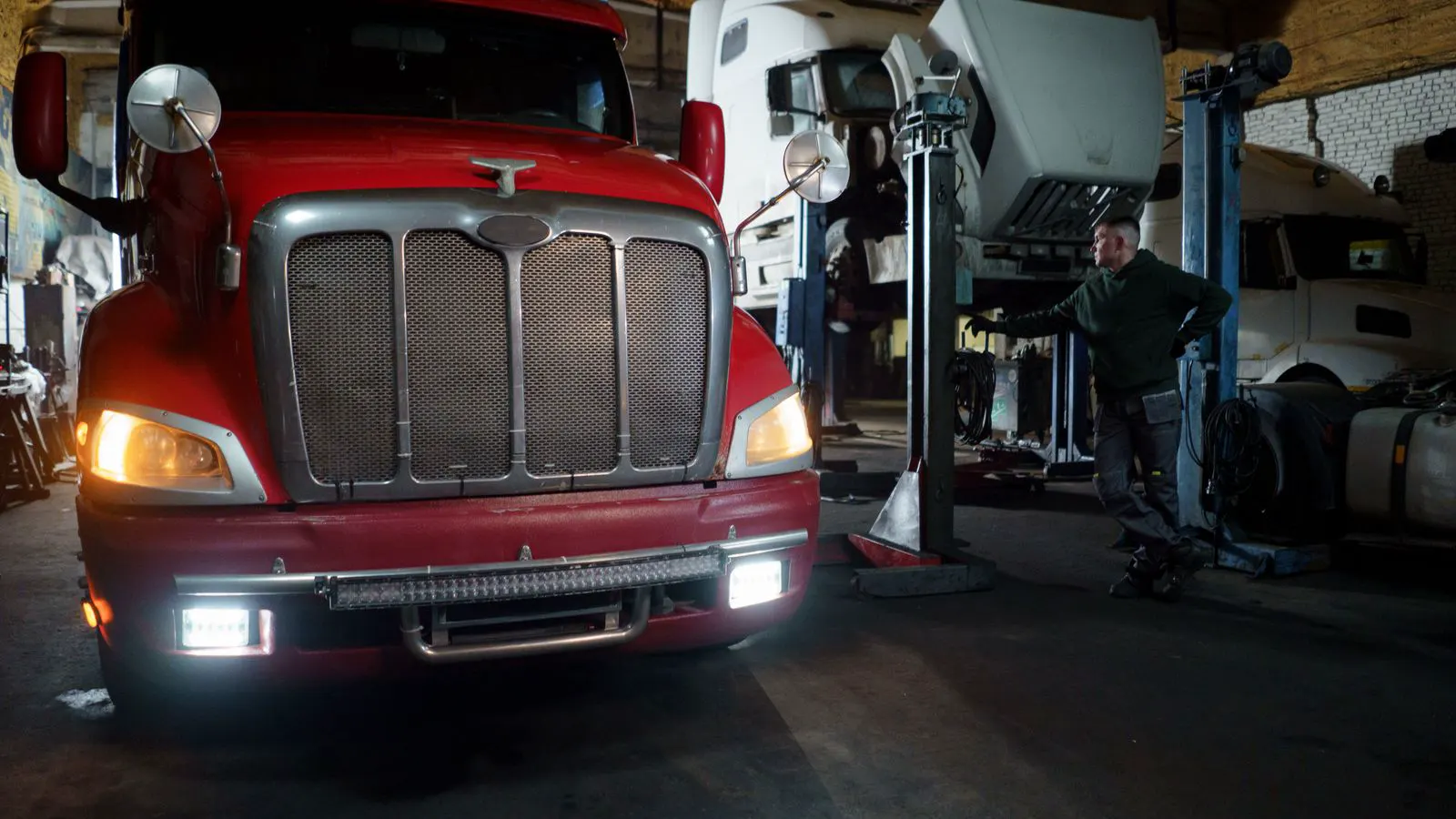
Set steer tire load ratings by matching the tire load index to the actual axle weight. Use the maximum axle load from the vehicle specification sheet and ensure the total rated capacity exceeds the peak load with a safety margin. Verify the selection against the manufacturer's steer axle recommendations.
- Match the steer tire load index to the maximum axle load from the vehicle specification sheet.
- Include a safety margin for the total rated capacity above the peak axle weight.
- Check manufacturer steer axle requirements before finalizing the tire size selection.
- Record the axle weight and load index in the fleet maintenance log for future reference.
Why Steer Tire Load Ratings Matter
Steer tires operate under distinct stress patterns compared to drive tires. They manage cornering forces, braking inputs, and steering torque simultaneously. If the load rating is too low, the sidewall bulges under heavy loads. If it is too high, the tire may be too stiff, reducing traction and fuel efficiency. Engineers must size these tires based on actual axle weight, not just the tire size.
The load rating is printed on the tire sidewall. It indicates the maximum weight the tire can carry. For trucks and buses, this rating must exceed the maximum axle load. The axle load is the weight on that specific axle, including the vehicle curb weight and the payload. A steer axle often carries a significant portion of the vehicle weight, especially in multi-axle configurations where the front axle supports both the engine compartment and part of the cabin.
Understanding the difference between static and dynamic load is critical for these positions. Static load is the weight when the vehicle is parked. Dynamic load increases significantly when the vehicle turns or brakes. A tire that performs well under static conditions may fail under dynamic stress if the load index is marginal. The sidewall structure must absorb these lateral and longitudinal forces without deforming permanently.
Prerequisites for Steer Tire Sizing
Before selecting a tire, gather the following documents and measurements:
- Vehicle specification sheet from the manufacturer.
- Gross vehicle weight rating (GVWR) and gross axle weight rating (GAWR) for each axle.
- Curb weight of the vehicle with no payload.
- Expected maximum payload for the specific route or duty cycle.
- Tire size options available from suppliers.
Do not rely on the tire size alone. A tire size determines the diameter and width. The load index determines the carrying capacity. Two tires with the same size can have different load ratings. One tire may be a standard construction, while the other is a reinforced or heavy-duty version with a thicker casing. The size tells you the footprint. The load index tells you the capacity.
You also need to know the wheel specifications. The wheel diameter, width, and offset affect the tire’s contact patch and steering geometry. A tire mounted on a wider wheel may have a larger contact area, which can increase rolling resistance. A tire on a narrower wheel may have a smaller patch, potentially reducing grip but improving handling response. These factors influence the final selection alongside load rating.
Step 1: Determine the Maximum Axle Weight
Start with the steer axle. Identify the maximum weight this axle will carry during normal operation. Use the gross axle weight rating from the vehicle specification sheet. This is the absolute limit set by the chassis manufacturer. The GAWR accounts for the structural limits of the axle, the suspension components, and the steering linkage.
If the vehicle carries uneven loads, the steer axle may bear more weight than the drive axle. In some configurations, the steer axle supports the front engine and cabin, while the drive axles support the cargo. In others, the weight distribution may shift based on where the payload is positioned. Weigh the vehicle on a scale if the specification sheet is incomplete. Record the actual weight of the steer axle under full load. This value is the baseline for the tire selection.
Consider the worst-case scenario for the specific route. If the vehicle operates on steep grades, the weight transfer during acceleration and braking can shift load between axles. On a downhill brake, the front axle may carry more weight than its static share. On an uphill acceleration, the drive axles may carry more. The steer axle load fluctuates. Your maximum axle weight figure must account for these peaks, not just the average.
Step 2: Apply a Safety Margin
Engineers typically add a safety margin to the axle weight. The total rated capacity of the steer tires should exceed the maximum axle weight. A common practice is to ensure the total rated capacity is at least 10 to 15 percent above the peak axle load.
This margin accounts for dynamic forces during cornering and braking. It also protects the tire from damage if the load is slightly higher than expected. If the margin is too small, the tire casing may swell or fail prematurely. If the margin is too large, the tire may be oversized and inefficient.
The margin is not arbitrary. It reflects the uncertainty in load measurement and the variability of driving conditions. A tire rated exactly at the maximum axle weight has no room for error. If the driver loads 500 pounds more than planned, or if the scale reading was off by a few hundred pounds, the tire is operating above its limit. The 10 to 15 percent buffer absorbs these variances. It ensures the tire remains within its design envelope even under unexpected conditions.
Step 3: Select the Tire Size
Choose a tire size that fits the wheel and vehicle clearance. Check the wheel diameter, width, and offset. The tire width should match the wheel width to ensure proper contact patch.
Consider the vehicle’s steering geometry. Steer tires often have a narrower contact patch than drive tires to improve steering response. A wider tire may reduce the steering effort but can increase the risk of damage on rough roads. Select the size that balances handling and load capacity.
The tire size also impacts the rolling resistance. A larger diameter tire typically has lower rolling resistance, which improves fuel efficiency. However, a larger tire requires more space in the wheel well and may require different wheel hubs. A smaller diameter tire may have higher rolling resistance but offers better torque at low speeds. For steer tires, the diameter must match the wheel and the vehicle’s speedometer calibration. An incorrect diameter can affect speedometer readings and transmission shifting.
Check the vehicle’s clearance for the tire. Some vehicles have tight wheel arches or fender liners. A tire with a higher aspect ratio or wider profile may rub against the body when the wheels are turned to full lock. This rubbing can damage the tire sidewall and the vehicle body. Measure the clearance before finalizing the size selection.
Step 4: Match the Load Index
Once the size is selected, verify the load index. The load index is a number that corresponds to a specific load capacity in pounds or kilograms. Use the load index chart provided by the tire supplier or the vehicle manufacturer.
For example, if the maximum steer axle weight is 10,000 pounds, and you use two tires, each tire must carry 5,000 pounds. The load index must be high enough to support 5,000 pounds per tire. Add the safety margin. If you aim for a 15 percent margin, each tire must be rated for 5,750 pounds. Select a tire with a load index that meets or exceeds this value.
The load index is often printed on the sidewall alongside the tire size. For instance, a tire might be marked “245/45R22 169J”. The “169” is the load index. This number indicates the maximum load capacity per tire at the recommended pressure. You must convert this index to pounds or kilograms using the standard chart. Do not guess. Use the chart provided by the supplier.
If the required load index is between two available values, select the higher one. Do not round down. A tire with a lower load index may fail under the expected load. The higher index tire may be more expensive, but it provides a longer service life and safer operation. The cost difference is usually minor compared to the risk of tire failure.
Step 5: Check Manufacturer Steer Axle Recommendations
The vehicle manufacturer may have specific recommendations for steer tires. These recommendations include tire size, load index, and speed rating. Follow these guidelines unless you have a valid engineering reason to deviate.
Some manufacturers require a specific tire type for steer positions. For example, they may recommend a tire with a reinforced sidewall for heavy vehicles. Check the vehicle owner’s manual or the tire selection guide from the manufacturer.
These recommendations are based on extensive testing and real-world data. The manufacturer has analyzed the steering geometry, the suspension design, and the expected operating conditions. Deviating from these recommendations without engineering justification can compromise vehicle performance and safety.
If you must deviate, document the reason. For example, if the recommended tire is not available from your primary supplier, you may need to select an alternative. Ensure the alternative meets or exceeds the load index and speed rating. Verify the tire size matches the original dimensions. Confirm the tire pressure requirements are compatible. Get approval from the fleet manager before installing non-recommended tires.
Step 6: Verify the Total Vehicle Weight
After selecting the steer tires, recalculate the total vehicle weight. Add the curb weight, the payload, and the weight of the tires themselves. Ensure the total does not exceed the GVWR.
The GVWR is the maximum weight the vehicle is designed to carry. Exceeding this limit puts stress on the chassis, suspension, and tires. It can also void the vehicle warranty. Record the final weight in the fleet maintenance log.
The GVWR is a static limit. It does not account for dynamic forces. However, it is a critical safety boundary. If the total weight exceeds the GVWR, the vehicle may become unstable. The suspension may sag, reducing ground clearance. The braking system may overheat. The tires may fail.
Use a scale to verify the weight after loading. Do not rely on estimated payload numbers. Weigh the vehicle when it is fully loaded for the specific route. Record the actual weight. Compare it to the GVWR. If the weight is close to the limit, consider reducing the payload or selecting tires with a higher load capacity.
Step 7: Document the Selection
Record the tire size, load index, and axle weight in the fleet database. This information is useful for future maintenance and replacement. It helps technicians make the same selection when the tires are replaced.
Use a standard format for the log entry. Include the vehicle identification number, the axle position, the tire size, the load index, and the date of installation. This documentation supports fleet management and quality control.
The log entry should also include the tire supplier and the batch number. This allows you to trace any issues to a specific production lot. If a tire fails, you can check the batch number to see if other tires from the same lot are affected. It also helps in warranty claims.
Keep the documentation accessible. Store it in a digital format that technicians can access at the point of service. A paper log in the vehicle is useful, but a digital database is more reliable. It allows you to track tire wear, replacement cycles, and maintenance history across the entire fleet.
Common Mistakes in Steer Tire Selection
Engineers make several errors when sizing steer tires. The most common mistake is using the tire size as the only selection criterion. Size does not determine load capacity. The load index does.
Another mistake is ignoring the dynamic forces on the steer axle. Steer tires experience cornering and braking forces that drive tires do not. A tire rated for the static axle weight may fail under dynamic load. Always include a safety margin.
Some engineers select a tire with a higher load index than needed. This can improve durability but may reduce fuel efficiency and handling. The tire may be too stiff for the vehicle’s steering system. Choose the minimum load index that meets the safety margin.
A less common mistake is using tires with different load indices on the same axle. This creates an imbalance. One tire may wear out before the other. It can affect the vehicle’s handling. Always use tires with the same size, load index, and speed rating on the same axle.
Another error is not checking the tire pressure. Incorrect pressure can reduce the effective load capacity of the tire. Under-inflated tires generate more heat, which can damage the casing. Over-inflated tires reduce the contact patch, which can decrease grip and increase the risk of punctures. Use the pressure recommended by the tire supplier or the vehicle manufacturer.
Final Verification Step
Before installing the tires, perform a final check. Measure the actual axle weight with a scale. Confirm the tire load index from the sidewall. Calculate the total rated capacity. Ensure it exceeds the measured axle weight by the required safety margin.
Check the tire pressure. Steer tires are often run at a different pressure than drive tires. Use the pressure recommended by the tire supplier or the vehicle manufacturer. Incorrect pressure can reduce the effective load capacity of the tire.
Inspect the tires for defects. Check the sidewalls for bulges, cracks, or cuts. Check the tread for uneven wear or damage. Do not install tires with visible defects.
Verify the wheel condition. Check the wheel for bends, cracks, or corrosion. A damaged wheel can cause tire failure. Ensure the wheel is properly balanced. An unbalanced wheel can create vibration, which stresses the tire and the suspension.
Table: Steer Tire Load Selection Example
| Maximum Axle Weight | Safety Margin | Target Load per Tire | Recommended Load Index |
|---|---|---|---|
| 10,000 lbs | 10% | 5,500 lbs | 35 |
| 12,000 lbs | 15% | 6,900 lbs | 42 |
| 14,000 lbs | 10% | 7,700 lbs | 45 |
| 16,000 lbs | 15% | 9,200 lbs | 50 |
The load index values in the table are examples. Always use the load index chart from the tire supplier to confirm the exact capacity.
Conclusion
Setting steer tire load ratings requires careful calculation. Use the maximum axle weight from the vehicle specification sheet. Add a safety margin for dynamic forces. Select a tire size that fits the wheel and vehicle. Match the load index to the calculated requirement. Check the manufacturer’s recommendations. Document the selection in the fleet log.
This process ensures the steer tires can handle the loads they are designed for. It reduces the risk of tire failure and extends the service life of the tires. It also supports fleet maintenance and cost control. Engineers should follow this method for all steer tire selections.
Frequently asked questions
What is the difference between steer tire load and drive tire load?
Steer tires carry the weight of the front axle and handle steering forces. Drive tires carry the weight of the drive axle and transmit engine power. Steer tires often require a higher load index due to dynamic cornering and braking loads.
How do I find the maximum axle weight?
Check the vehicle specification sheet for the gross axle weight rating. If the vehicle carries uneven loads, weigh the vehicle on a scale to measure the actual axle weight under full load.
Can I use the same tire size for steer and drive positions?
Yes, if the load index and speed rating meet the requirements for both positions. However, steer tires often have different load indices or sidewall constructions than drive tires.
What happens if the steer tire load rating is too low?
The tire may bulge under heavy loads, which can lead to casing damage or blowout. The sidewall may fail, causing a sudden loss of steering control.
How often should I check the steer tire load ratings?
Check the load ratings during the initial selection and when replacing tires. Also verify the axle weight during regular maintenance if the payload changes.